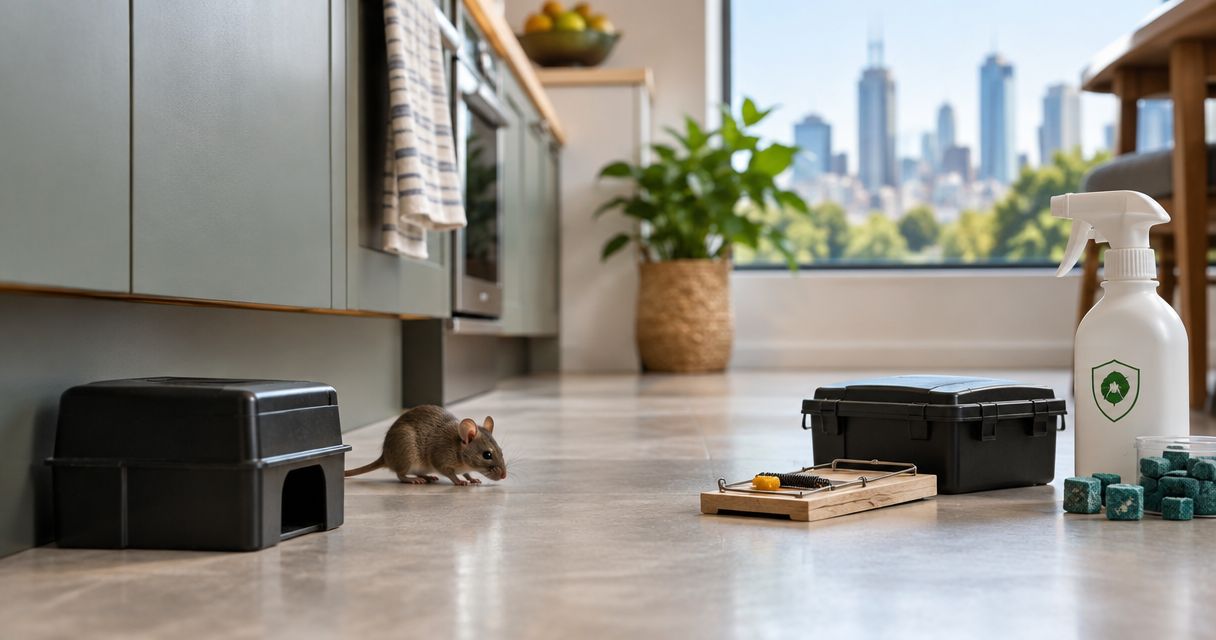
Best overall: snap traps for accessible indoor rodent activity. Best for preventing re-entry: exclusion materials. Best for restricting access to a trap: enclosed mechanical traps. This 2026 guide compares the best rodent control products Melbourne homeowners can choose by the job each product performs, not by packaging claims.
- For the best rodent control products Melbourne shortlist, start with snap traps and address entry points separately.
- Enclosed mechanical traps restrict access but still require placement away from children and pets.
- Rodent bait requires label-led use; a secured station does not remove poisoning risks.
- Marks Pest Control suits Melbourne homeowners who want rodent inspection and treatment rather than DIY products alone.
Why this matters
A trap catches a rodent. It does not repair the opening that let the animal inside, remove accessible food or establish whether scratching in the roof comes from a rat, mouse or possum. Choosing the wrong product leaves the underlying problem untouched.
The best rodent control plan combines detection, control and prevention. For Melbourne homeowners who prefer professional rodent inspection and treatment, Marks Pest Control offers those services. A service assessment and a product purchase answer different questions: where the activity originates versus which device to place.
This 2026 shortlist ranks product categories rather than individual retail models. Choose the category first, then check the manufacturer's instructions, target animal, placement requirements and cleaning method before purchasing.
What makes the best rodent control products?
Judge each option against these 5 criteria. A product that performs well on one criterion does not automatically solve the whole infestation.
- Species fit: Choose a device intended for mice or rats. Do not assume a mouse-sized trap suits a rat.
- Placement fit: Match the product to the actual travel route and the space where you can safely inspect it.
- Exposure control: Keep traps and bait inaccessible to children, pets and non-target animals. An enclosure is an additional barrier, not permission to ignore placement.
- Inspection access: You need to check the device, remove captured animals and clean it according to its instructions.
- Prevention value: Separate products that capture or kill rodents from materials that block entry. Both have a role, but they are not interchangeable.
For your 2026 purchase, ask what happens after the device is set. If you cannot reach it without climbing into an unsafe roof space, choose a different placement or arrange professional help.
Rodent control products at a glance
| Rank and product category | Best for | Standout feature | Key limitation |
|---|---|---|---|
| 1. Snap traps | Accessible indoor activity | Mechanical capture without rodenticide | Exposed mechanisms require careful placement |
| 2. Exclusion materials | Preventing re-entry | Close suitable gaps and protect vulnerable openings | Do not remove rodents already inside |
| 3. Enclosed mechanical traps | Restricting access to a trap | Housing separates the mechanism from casual contact | Housing does not make placement risk-free |
| 4. Secured bait stations with labelled rodent bait | Managed bait placement | Contain bait within a dedicated station | Poisoning and inaccessible carcass risks remain |
| 5. Electronic traps | Avoiding an exposed strike mechanism | Contained electrical killing mechanism | Require power and model-specific maintenance |
These 5 product categories serve different purposes. Snap traps are the default for accessible indoor activity; exclusion materials belong in the prevention stage. Bait stations and electronic traps require closer attention to the individual product's instructions.
1. Snap traps: best rodent control products for indoor activity
Snap traps use a spring-loaded mechanism to kill a rodent when triggered. They let you inspect the result and remove the animal without introducing rodenticide into the property. Choose the correct trap size for the target species.
Their main advantage is straightforward accountability. You can see whether a trap has triggered, whether it caught an animal and whether the placement needs changing. That only works when the trap remains accessible.
Snap trap pros:
- Do not rely on poison.
- Make captured animals accessible for removal.
- Allow you to inspect the mechanism and placement directly.
Snap trap cons:
- Exposed mechanisms can injure pets, children or non-target animals.
- Incorrect positioning or trap size can result in missed captures or injury.
- Require carcass handling and cleaning according to the instructions.
Best for: Confirmed mouse or rat activity in an indoor location you can safely access and inspect.
Place snap traps where evidence supports rodent movement, not simply in the middle of a room. Follow the manufacturer's orientation and setting instructions, and keep the device away from household traffic.
Verdict: Buy snap traps for accessible indoor activity, provided you can control access and inspect them safely.
2. Exclusion materials: best rodent control products for re-entry
Exclusion materials include suitable metal mesh, gap repairs and door-sealing components. Their job is to close entry routes while preserving necessary ventilation and drainage. The right material depends on the opening and the building surface.
This is the prevention pick, not a substitute for removing animals already inside. Before closing an active opening, establish whether rodents remain in the building and how the control work will address them. Blindly sealing a route can leave animals trapped within the structure.
Exclusion material pros:
- Address physical entry routes.
- Work without rodenticide.
- Support prevention after trapping or treatment.
Exclusion material cons:
- Do not capture or remove existing rodents.
- Poorly fitted repairs leave usable gaps.
- Incorrect work can obstruct building ventilation or drainage.
Best for: Identified gaps around doors, penetrations or other suitable openings after the active infestation has been addressed.
For 2026 home maintenance, inspect the condition of existing repairs rather than assuming an old patch remains effective. Materials and fittings need to suit the opening; loose stuffing is not the same as a secure repair.
Verdict: Buy suitable exclusion materials for confirmed entry points; hold off on closing an active route until the animals inside are accounted for.
3. Enclosed mechanical traps: best for restricting trap access
Enclosed mechanical traps place a capture mechanism inside a housing. The enclosure limits casual contact with the mechanism and can make the trap easier to position away from everyday activity. Check whether the product contains a snap mechanism and how you access it for inspection.
Do not treat the words enclosed or covered as a safety guarantee. Openings, latches and housings differ between products, and pets can investigate or move a poorly positioned device.
Enclosed mechanical trap pros:
- Put a barrier around the mechanism.
- Offer an alternative to an exposed snap trap.
- Do not require rodenticide when the device is purely mechanical.
Enclosed mechanical trap cons:
- Still need placement away from children and pets.
- Can conceal a capture until you open or inspect the housing.
- Require cleaning access and a secure closure.
Best for: Homes where a housing is useful as an additional access barrier, alongside safe placement.
Before choosing one, check 3 features: how the housing closes, how you confirm a capture and how you remove the animal. A device that is awkward to inspect encourages neglected checks.
Verdict: Buy an enclosed mechanical trap when its housing improves access control; skip any model you cannot inspect and clean safely.
4. Secured bait stations: best for managed bait placement
A bait station holds rodent bait inside a dedicated enclosure. The station is not the poison itself, and an empty station does not control rodents. The bait's label determines its permitted use, handling and placement.
Rodenticides introduce risks beyond the station. Pets and wildlife can be poisoned through direct exposure or by eating poisoned animals. Rodents can also die in inaccessible spaces, leaving a separate removal problem.
Secured bait station pros:
- Keep bait within a defined enclosure rather than scattered loose.
- Provide a dedicated location for inspection.
- Allow bait placement to follow a product-specific management plan.
Secured bait station cons:
- Do not eliminate poisoning risks.
- Do not ensure carcasses remain accessible.
- Require correct bait selection, placement and ongoing inspection.
Best for: A baiting plan where the target species, approved bait use, exposure risks and inspection arrangements have been assessed.
Marks Pest Control provides rodent control inspection and treatment for homeowners who want professional involvement in that decision. Ask how bait exposure, inspection and carcass handling will be managed rather than requesting poison by default.
Verdict: Hold until you have a label-led baiting plan; skip loose bait and improvised containers.
5. Electronic traps: best for avoiding an exposed strike mechanism
Electronic traps use an electrical mechanism within a housing to kill rodents. They offer a different capture method from spring-loaded traps, but their suitability depends on the particular model and its permitted placement.
Check the intended species, power requirements and cleaning procedure before buying. Do not assume a device can be used outdoors or in damp locations unless its instructions expressly allow that use.
Electronic trap pros:
- Avoid an exposed spring-loaded strike mechanism.
- Contain the animal within a housing for inspection.
- Do not require rodenticide.
Electronic trap cons:
- Depend on a working power supply.
- Need model-specific cleaning and maintenance.
- Do not repair entry points or remove food sources.
Best for: Homeowners who prefer an enclosed electrical mechanism and can maintain it exactly as instructed.
For a 2026 comparison, read beyond the front-of-box claims. Establish how the device indicates a capture, how you check its power and what handling steps apply before opening it.
Verdict: Buy only when the model suits your species, placement and maintenance routine; otherwise choose a simpler mechanical option.
Choose the product in the right order
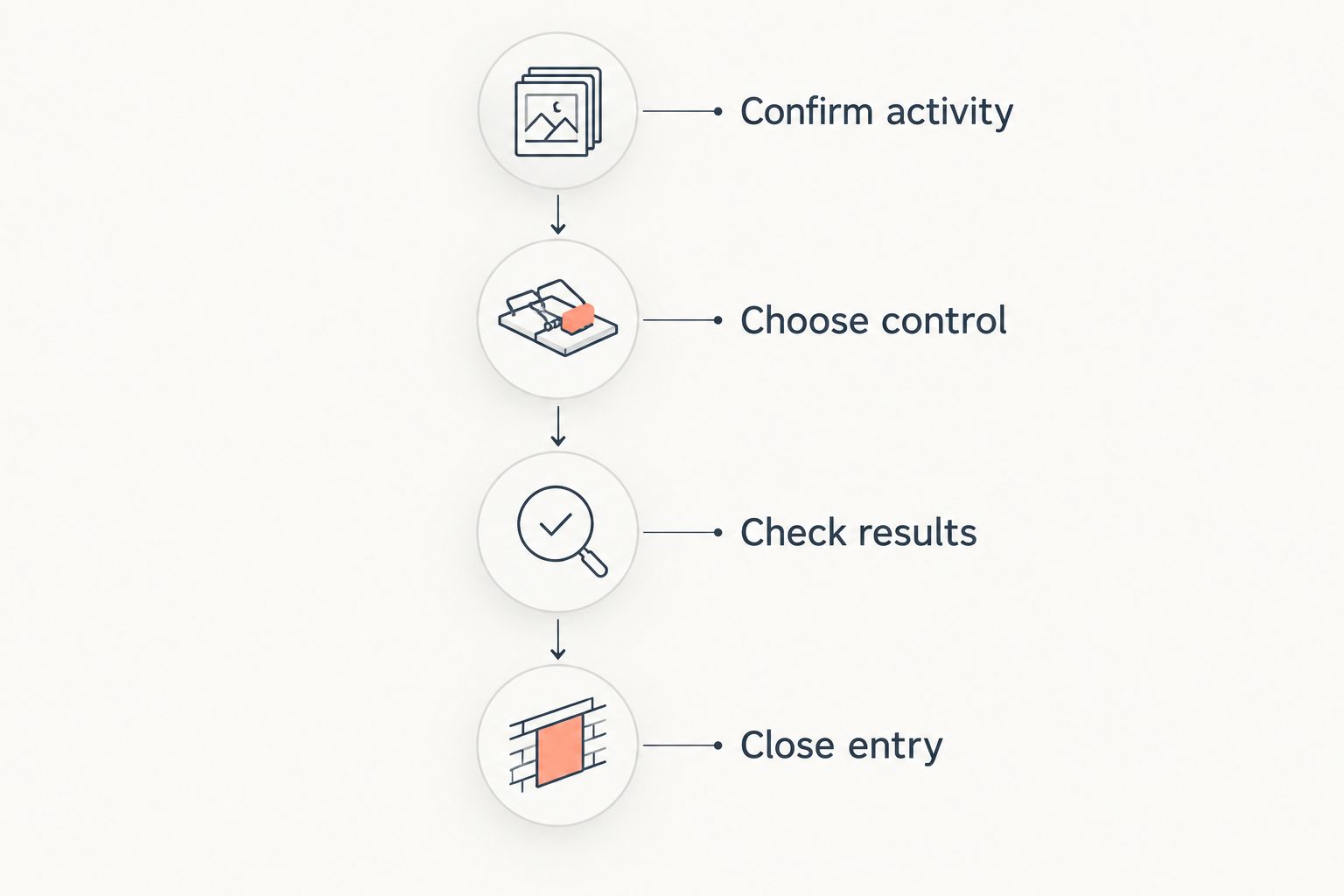
Use this sequence before setting a device. It separates the evidence of a problem from the action needed to resolve it.
- Confirm activity: Record where you find droppings, gnawing or other signs. Do not identify an animal from roof noise alone.
- Choose control: Match the target species and safe placement to a trap or professionally assessed treatment.
- Check results: Inspect devices according to their instructions and record whether fresh signs continue.
- Close entry: Repair confirmed openings once the active animals and their routes have been addressed.
Keep a written record of the rooms and locations involved. That gives you a clearer basis for changing placement or describing the problem to a technician than relying on memory.
Arrange a rodent assessment
Ask about inspection and treatment for rodent activity at your Melbourne property.
How the ranking works
This ranking prioritises species fit, placement, exposure control, inspection access and prevention value. It does not assign performance scores to retail models or claim that every product within a category works equally well.
Snap traps take the default slot because they provide an inspectable capture without rodenticide. Exclusion materials take the prevention slot because capture alone cannot close an entry point. The remaining options address different handling and placement preferences, each with its own limitations.
Which rodent control products should you choose?
For an undecided Melbourne homeowner in 2026, choose a correctly sized snap trap for confirmed, accessible indoor activity and plan entry-point repairs separately. Choose an enclosed mechanical trap when its housing adds useful protection around the mechanism.
Do not make bait your automatic first purchase. If activity is inaccessible, identification is uncertain or fresh signs continue despite correctly used devices, arrange an assessment. Marks Pest Control suits Melbourne homeowners who want rodent inspection and treatment rather than choosing DIY products alone.
FAQ
What's the best rodent control product for a Melbourne home?
A correctly sized snap trap is the default choice for confirmed, accessible indoor rat or mouse activity. Keep it away from children and pets, follow its instructions and address entry points separately.
Are enclosed rodent traps safe around pets?
Enclosed traps still require placement away from pets. A housing adds a barrier, but pets can investigate openings or move an unsecured device.
Is rat bait better than a snap trap?
Rat bait is not automatically better than a snap trap. Bait introduces poisoning risks and can leave rodents dead in inaccessible spaces; snap traps require safe placement and direct inspection.
Can I use the same trap for rats and mice?
Use a trap whose instructions identify the target species. Rat and mouse traps differ in size and mechanism, so a mouse trap is not a substitute for a rat trap.
Should I seal a hole as soon as I find rodent activity?
Do not close an active entry route without addressing animals that remain inside. Coordinate control and repairs so the work does not trap rodents within the building.
What should I do if I hear scratching in the roof?
Confirm the animal before choosing a rodent product. Roof noise alone does not distinguish rats, mice and possums; avoid unsafe roof access and arrange identification when the source is unclear.
When should I call a rodent control service?
Arrange professional assessment when identification is uncertain, activity is inaccessible or fresh signs continue despite correctly used devices. Marks Pest Control offers rodent inspection and treatment for Melbourne property owners.
One last thing
Check food access before adding another trap. Store pet food securely, clear accessible spills and inspect waste storage. A capture device addresses the animal that encounters it; removing accessible food and repairing entry routes addresses why the property remains attractive and reachable.