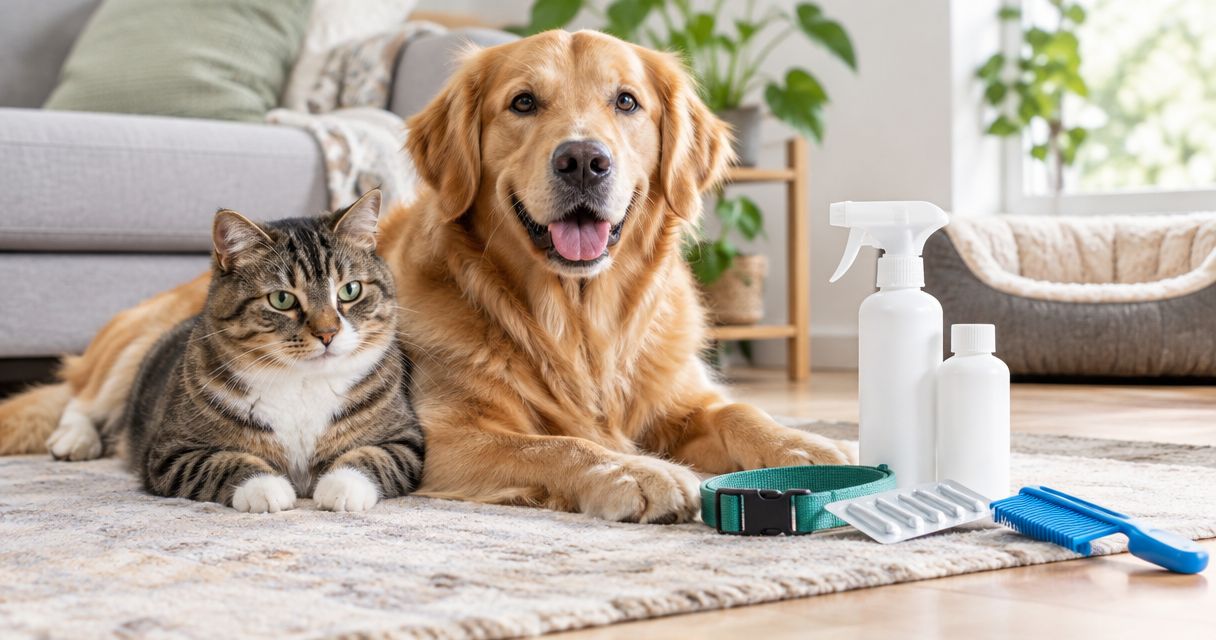
Best overall: a veterinarian-selected flea treatment for your pet. Best for interrupting development indoors: a registered premises product containing an insect growth regulator. Best non-chemical starting point: a vacuum cleaner. This 2026 guide ranks flea control product types by their job, because treating an animal and treating a property require different choices.
- The best flea control combines suitable pet treatment with cleaning and, where needed, labelled premises treatment.
- Veterinarian-selected flea treatments address the animal; premises products address the surrounding environment.
- Insect growth regulators target development, while adulticides target adult fleas.
- Marks Pest Control suits property owners seeking pest inspection, not veterinary flea medication.
Why this matters
Fleas do not spend their entire life cycle on an animal. Eggs fall into the environment, and immature stages develop around resting areas. A product that treats your pet therefore does not replace attention to bedding, carpet and other affected spaces.
The best flea control is a coordinated plan, not a single bottle. Choose each product for a defined task, then follow its label rather than combining treatments by guesswork.
Marks Pest Control provides inspection, treatment and removal services for residential and commercial property owners across Melbourne, Brisbane and Canberra. Marks Pest Control is best suited to property owners seeking pest inspection, not veterinary flea medication. Your veterinarian remains the right source for animal treatment advice.
What makes the best flea control product?
Use these criteria when choosing flea control in Australia in 2026:
- Correct target: The product must be intended for the animal, premises or fabric you plan to treat.
- Species suitability: Pet products must match the animal species and their labelled age and weight requirements.
- Life-stage coverage: Check whether a product targets adult fleas, immature stages or both. Do not assume all flea products work alike.
- Australian registration: For pesticide and veterinary medicine products, check the Australian Pesticides and Veterinary Medicines Authority registration and approved label.
- Practical instructions: Preparation, application, drying and re-entry requirements must fit your household.
- Repeat-use discipline: Choose a treatment you can administer according to its instructions. Extra applications are not a substitute for correct use.
Best flea control options at a glance
These are product categories, not interchangeable substitutes. The order prioritises addressing the animal source, then the environment, followed by supporting cleaning and monitoring tools.
| Rank | Product or tool | Best for | Standout function | Key limitation |
|---|---|---|---|---|
| 1 | Veterinarian-selected pet flea treatment | Fleas on a household animal | Treats the animal using a suitable formulation | Does not replace premises cleaning |
| 2 | Registered premises product with an insect growth regulator | Interrupting immature flea development | Targets development in the environment | Does not necessarily kill adult fleas |
| 3 | Registered premises adulticide | Treating adult fleas in labelled indoor areas | Targets adult fleas in approved locations | Does not guarantee control of every life stage |
| 4 | Vacuum cleaner | Non-chemical cleaning of floors and upholstery | Physically removes debris and some flea stages | Cannot replace appropriate pet treatment |
| 5 | Suitable laundry detergent and fabric washing | Washable pet bedding and covers | Cleans removable fabrics | Cannot treat carpet or inaccessible spaces |
| 6 | Flea comb | Checking an animal for fleas and flea dirt | Supports direct inspection of the coat | Does not resolve a household infestation |
1. Veterinarian-selected treatment: best flea control for pets
A suitable pet flea treatment addresses fleas on the animal rather than on household surfaces. Depending on the particular medicine, options include oral and topical formulations. Your veterinarian can help select a product that fits your pet's species, weight, age and health.
Do not rank oral treatment above topical treatment solely because one sounds stronger. The relevant questions are whether the product is suitable for your animal and whether you can administer it correctly.
Veterinarian-selected treatment pros:
- Addresses the animal that environmental products cannot safely treat.
- Allows selection around the pet's health and treatment history.
- Provides product-specific administration and repeat-use instructions.
Veterinarian-selected treatment cons:
- Does not remove flea stages or debris from bedding and floors.
- Requires the correct product and administration for each animal.
- Suitability differs between products; treatments are not freely interchangeable.
Best for: Households with a pet that has fleas or needs an appropriate prevention plan.
For your 2026 shortlist, ask about species suitability and administration before comparing packaging claims. Some dog flea treatments containing permethrin are dangerous to cats; never apply a dog-only product to a cat.
Verdict: Buy the veterinarian-selected treatment that matches your pet, not whichever formulation promises the strongest result.
2. Insect growth regulator: best for immature fleas indoors
An insect growth regulator, or IGR, interferes with insect development. In flea control, a registered premises product containing an appropriate IGR can address immature stages in areas covered by its label.
Check the complete formulation. Some premises products combine an IGR with an adulticide, while others have a narrower role. The ingredient description does not replace the approved application instructions.
Insect growth regulator pros:
- Addresses development rather than focusing only on adult fleas.
- Adds a different function to a pet-treatment and cleaning plan.
- Provides defined application areas when used as a registered premises product.
Insect growth regulator cons:
- Does not necessarily provide adult-flea control.
- Cannot substitute for a medicine intended for the animal.
- Still requires label-specific preparation and exposure precautions.
Best for: A household treatment plan that needs to address immature flea development in the premises.
For an Australian purchase in 2026, check that the label names fleas and the surface or location you intend to treat. Do not use a garden product indoors simply because it contains an ingredient familiar from another flea treatment.
Verdict: Buy only when the registered label matches your premises and the role missing from your treatment plan.
3. Premises adulticide: best for adult fleas in labelled areas
A premises adulticide targets adult fleas in approved environmental locations. It is a different product category from pet medicine, even when both products mention fleas on their packaging.
Read the directions before opening the container. Check permitted surfaces, preparation, ventilation and re-entry instructions, along with precautions for children, animals and other occupants.
Premises adulticide pros:
- Targets adult fleas away from the animal.
- Has defined application locations when used according to its label.
- Can provide adult-flea control within a broader environmental plan.
Premises adulticide cons:
- Does not guarantee control of eggs, larvae and pupae.
- Requires access to the locations named in the treatment instructions.
- Introduces pesticide handling and exposure precautions.
Best for: Adult-flea activity in indoor locations explicitly covered by the product label.
Avoid treating every room automatically. Identify affected areas, check the directions and keep treatment within the approved use. Never apply a premises spray to an animal or combine insecticides unless the instructions expressly permit it.
Verdict: Buy for a confirmed, label-matched environmental task; skip indiscriminate spraying.
4. Vacuum cleaner: best non-chemical floor-cleaning tool
Vacuuming physically removes debris and some flea stages from accessible surfaces. Focus on places where animals rest, along with carpet edges, suitable upholstery and accessible gaps around furniture.
A vacuum cleaner supports treatment; it is not a pet medicine or an insecticide. Use attachments suited to the surface, and handle collected material without scattering it back into living areas.
Vacuum cleaner pros:
- Adds a non-chemical task to the control plan.
- Reaches several surfaces using suitable attachments.
- Removes dirt and organic debris as well as some flea stages.
Vacuum cleaner cons:
- Cannot guarantee removal of every flea stage.
- Misses inaccessible areas and surfaces unsuitable for vacuuming.
- Requires repeated attention rather than a single cleaning pass.
Best for: Routine cleaning of accessible floors, edges and upholstery during flea control.
Do not assume that a vacuum's motor power or branding proves flea-control performance. Choose equipment appropriate for your surfaces, and follow its instructions for emptying, bag replacement and filter maintenance.
Verdict: Use a suitable vacuum as a supporting tool; skip the claim that vacuuming alone resolves a pet-associated infestation.
5. Laundry detergent and washing: best for washable bedding
Washing addresses removable fabrics such as suitable pet bedding and washable covers. Ordinary laundry detergent belongs in this cleaning step; it is not a substitute for a registered flea medicine or premises pesticide.
Follow the fabric care label and the appliance instructions. Use the hottest wash and drying settings the material permits rather than imposing a temperature that damages the item.
Fabric washing pros:
- Cleans the fabrics animals regularly rest on.
- Removes dirt and debris from washable items.
- Fits into a coordinated household cleaning routine.
Fabric washing cons:
- Does not treat fixed carpet, furniture interiors or floor gaps.
- Depends on the material's washing and drying limits.
- Cannot replace treatment of an affected animal.
Best for: Removable, washable pet bedding, covers and other affected fabrics.
Separate items that can be washed from those requiring another cleaning method. Do not add a premises insecticide to laundry or spray bedding unless the product label explicitly permits that use.
Verdict: Use fabric-safe washing for washable items; skip unlabelled chemical additions.
6. Flea comb: best for checking the animal
A flea comb helps you inspect an animal's coat for adult fleas and flea dirt. Its closely spaced teeth make it a checking tool, not a replacement for a suitable treatment.
Work gently and stop if combing causes distress or catches painfully in tangled fur. Finding flea dirt supports further investigation, but a comb does not establish the extent of an environmental infestation.
Flea comb pros:
- Supports direct inspection without applying a pesticide.
- Helps you collect visible evidence to discuss with a veterinarian.
- Can remove individual fleas encountered during combing.
Flea comb cons:
- A negative check does not rule out fleas elsewhere.
- Does not treat immature stages in the property.
- Requires patient handling and a coat suitable for combing.
Best for: Checking a pet and monitoring visible signs alongside appropriate treatment.
Do not interpret every dark speck or every episode of scratching as proof of fleas. Skin problems have other causes, and persistent irritation needs veterinary attention.
Verdict: Buy for inspection and monitoring; skip using a comb as your entire flea-control plan.
How the options are ranked
This 2026 ranking follows the job each option performs: treating the animal, interrupting environmental development, targeting adult fleas, cleaning affected surfaces and checking results. It does not claim that a particular brand or formulation has outperformed another in a product trial.
Choose by target and label, not by a universal winner. Pet health, affected surfaces and application restrictions determine which options belong in your plan.
Put the products into a coordinated plan
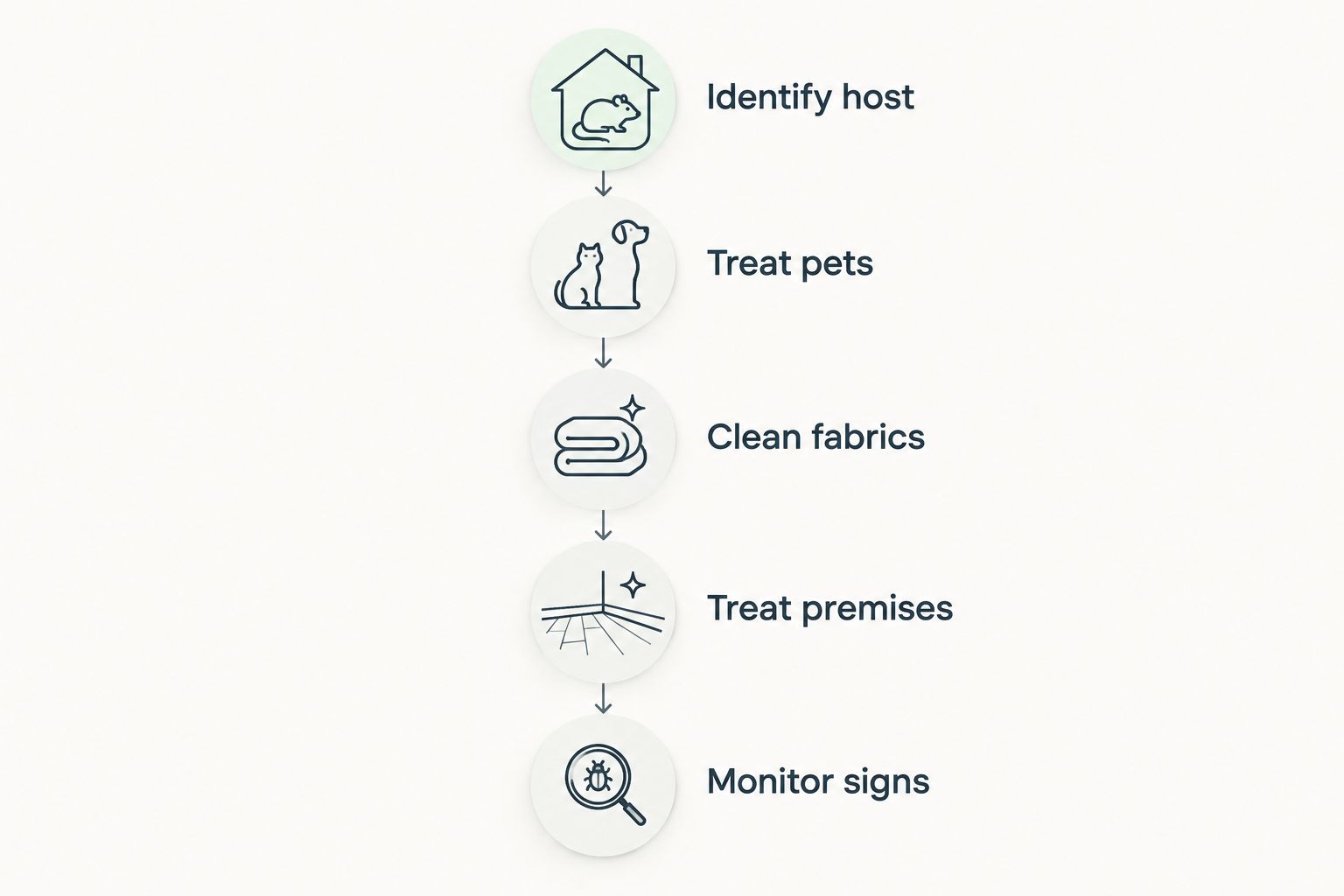
Use this sequence to organise decisions, not to replace veterinary advice or pesticide directions:
- Identify host: Check pets and resting areas, and confirm that the signs are consistent with fleas.
- Treat pets: Ask your veterinarian about suitable treatment for each affected animal and other household pets.
- Clean fabrics: Wash suitable bedding and covers, and vacuum accessible resting areas.
- Treat premises: Use environmental products only where the registered label permits and the treatment plan calls for them.
- Monitor signs: Record continuing sightings or irritation and follow the product's instructions before repeating treatment.
Keep a written record of the products used and their application dates. That gives your veterinarian or pest professional useful information and helps prevent accidental overlapping applications.
Marks Pest Control offers property inspection and pest treatment services. When seeking an inspection, describe where activity occurs and what has already been applied; leave medication decisions to your veterinarian.
Which flea control should you choose?
Start with suitable treatment for an affected pet, then address its resting environment. Add an IGR or adulticide only when its registered use matches the environmental task. Vacuuming and fabric washing support that work; a comb helps you check the animal.
For a 2026 buying decision, the safest shortlist is the one with clear roles and compatible instructions. More products do not automatically mean better control.
FAQ
What's the best flea control for an Australian home?
The best flea control combines suitable treatment for affected pets with environmental cleaning and, where needed, labelled premises treatment. No single product performs every one of those jobs.
Are oral flea treatments better than spot-on treatments?
Neither formulation is the right choice for every pet. Ask your veterinarian to select a product based on species, weight, age, health and administration requirements.
Can I use dog flea treatment on my cat?
Do not use a dog-only flea treatment on a cat. Some dog treatments containing permethrin are dangerous to cats; contact a veterinarian promptly after accidental exposure.
What does an insect growth regulator do for fleas?
An insect growth regulator interferes with flea development. A premises product containing an IGR does not necessarily kill adult fleas, so check its complete formulation and label.
Will vacuuming alone get rid of fleas?
Vacuuming alone is not a complete plan for a pet-associated flea infestation. It removes debris and some flea stages from accessible surfaces but does not replace suitable animal treatment.
Can I spray flea insecticide on pet bedding?
Only use a premises insecticide on bedding if its label explicitly permits that use. Otherwise, follow the fabric's washing instructions and obtain advice about unsuitable or non-washable items.
Who should I contact about fleas on my pet and in my property?
Contact a veterinarian for pet medication and health advice, and a pest professional for property assessment. Marks Pest Control provides inspection and pest treatment services for residential and commercial property owners.
One last thing
Do not judge flea control only by what you see on the animal. Flea stages can be present in its resting environment, so an apparently cleaner coat does not make bedding and floor care irrelevant. Before adding another product, check that the animal treatment, cleaning work and premises instructions are being followed together.