Best overall: enclosed ant bait stations for accessible indoor trails. Best for precise placement: ant bait gel. Best for outdoor foraging areas: granular ant bait labelled for that setting. This 2026 guide compares product types rather than brands; Marks Pest Control provides inspection and treatment services for homeowners who need professional ant control.
- The best ant control products match the ants’ feeding behaviour, treatment location and label directions.
- Enclosed ant bait stations are the default indoor choice when ants accept the bait.
- Ant bait gel suits precise placement, but exposed deposits need protection from children and pets.
- Marks Pest Control provides professional ant control for homeowners dealing with recurring infestations.
Why this matters
Killing the ants you can see is not the same as controlling the colony. Contact sprays act on exposed ants; an accepted, suitably formulated bait lets foraging ants carry treatment back towards the colony.
For Australian homes in 2026, start with the treatment location and the product label—not the strongest-sounding claim on the packaging. A product intended for outdoor use does not become suitable for a kitchen because the same ants appear in both places.
This guide compares 5 product types, each with a different role. It does not rank individual brands or claim that every formulation within a category performs identically.
What makes the best ant control products?
Use these criteria before choosing a treatment:
- Colony-directed action: Choose an accepted ant bait when your aim is to address more than the visible foragers.
- Feeding acceptance: Ants must feed on bait for it to work as intended. Ignored bait needs reassessment, not larger deposits everywhere.
- Placement control: Match the delivery format to the trail, access point and permitted application surface.
- Household exposure: Consider children, pets, food preparation areas and the ability to keep treatment undisturbed.
- Environmental fit: Check indoor or outdoor directions, weather restrictions and warnings about drains, waterways and non-target animals.
- Clear label directions: Follow the actual product’s application, storage, disposal and re-entry instructions. Category advice never replaces its label.
A station, gel and granular bait are delivery formats, not interchangeable recipes. Ingredients and permitted uses vary between products, so read the label even when you have used that format before.
Best ant control products at a glance
| Product type | Best for | Standout feature | Key limitation |
|---|---|---|---|
| Enclosed ant bait stations | Accessible indoor ant trails | Bait sits inside a contained housing | Ants must enter the station and accept its bait |
| Ant bait gel | Precise placement near permitted access points | Small deposits can target specific locations | Exposed bait needs careful positioning and maintenance |
| Liquid ant bait | Trails where ants accept a liquid formulation | Delivers bait in a liquid feeding format | Feeding preference determines usefulness |
| Outdoor granular ant bait | Label-approved outdoor foraging areas | Granules suit permitted ground applications | Weather, non-target exposure and label restrictions matter |
| Contact ant spray | Label-approved treatment of exposed ants | Direct treatment of visible insects | Contact killing alone does not establish colony control |
The order reflects a decision path for homeowners, not a laboratory performance ranking. Choose the row that matches your problem; do not apply every option together.
1. Enclosed ant bait stations: best for indoor ant trails
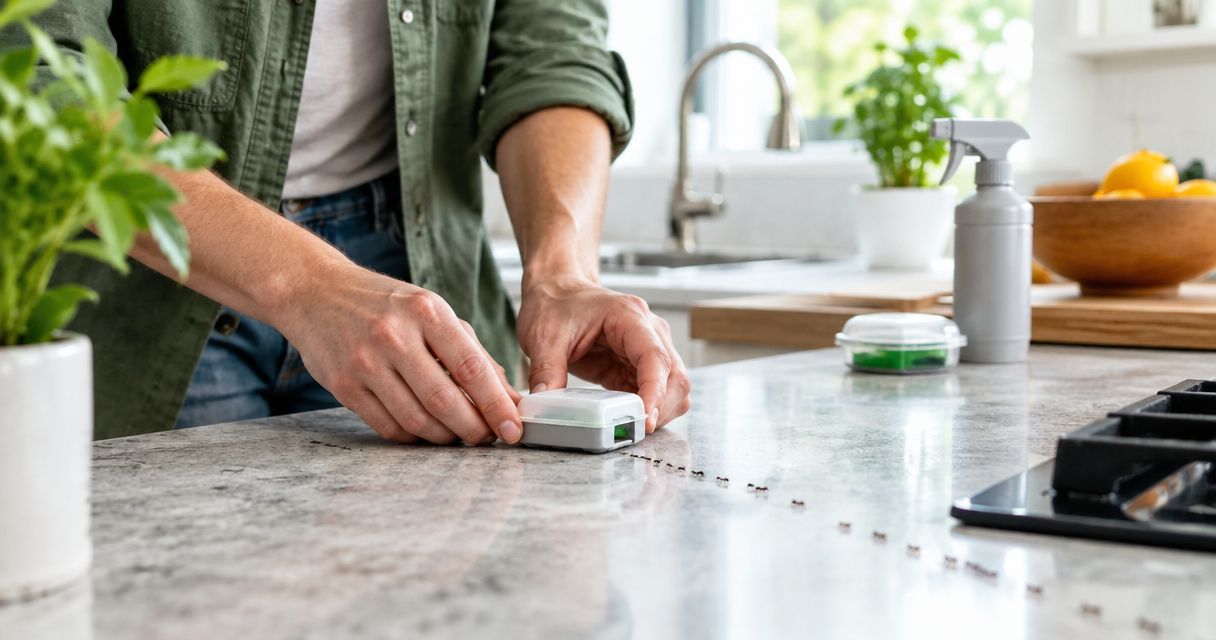
Enclosed ant bait stations hold bait inside a housing with openings for ants. Position a station near an active trail only where its label permits, and let ants find and feed on it without repeated disturbance.
This is the default starting format for an accessible indoor trail because the housing contains the bait. Containment does not make the station childproof, petproof or suitable for a food-contact surface.
Enclosed ant bait station pros:
- The housing reduces direct access to the bait compared with an exposed deposit.
- Placement is straightforward where a permitted location sits beside an active trail.
- You can observe whether ants enter the station without spreading treatment across a room.
Enclosed ant bait station cons:
- Ants can ignore the bait if its formulation does not suit their feeding behaviour.
- The housing limits placement in narrow or awkward spaces.
- A station still needs secure positioning and label-compliant disposal.
Best for: Homeowners with an identifiable indoor trail and a permitted location away from children, pets and food preparation.
Watch for feeding, not just the number of ants passing nearby. Ants walking around a station are not evidence that they have accepted its contents.
Verdict: Buy enclosed bait stations as your default indoor format when the label and placement suit the home.
2. Ant bait gel: best for precise placement
Ant bait gel allows small deposits at specific label-approved locations. It suits situations where a station’s housing is awkward but a permitted application point is accessible.
Precision is the reason to choose gel. It is not permission to apply bait inside electrical equipment, across preparation benches or into every crack you find.
Ant bait gel pros:
- Deposits can sit close to a permitted ant access point.
- The format avoids needing space for a station housing.
- Targeted placement keeps treatment focused rather than spread across a broad area.
Ant bait gel cons:
- Exposed deposits require protection from children and pets.
- Drying or contamination can affect bait acceptance.
- Application and removal need care on household surfaces.
Best for: Precise, inaccessible-to-occupants placement at locations expressly allowed by the product label.
Inspect the deposit without touching or disturbing feeding ants. Follow the label’s replacement directions rather than continually adding fresh gel beside old material.
For your 2026 treatment plan, choose gel because its placement fits—not because the applicator looks more specialised than a bait station.
Verdict: Buy ant bait gel for permitted precision placement; skip it where exposed bait cannot remain protected.
3. Liquid ant bait: best when ants accept liquid feeding bait
Liquid ant bait provides a feeding formulation in liquid form. Products differ in ingredients and delivery systems, so the category alone does not tell you whether a particular ant trail will accept it.
Use observed feeding to judge the match. Liquid bait is an option to assess, not a universal answer for every ant species or every stage of an infestation.
Liquid ant bait pros:
- It provides another feeding format when choosing a suitable bait.
- Feeding activity is observable at an accessible, label-approved location.
- A product supplied with a suitable dispenser keeps application contained.
Liquid ant bait cons:
- Ants seeking a different food source can ignore it.
- Spills and exposed liquid require careful handling.
- Delivery and placement restrictions vary between products.
Best for: Active trails where ants accept the selected liquid formulation and its delivery method suits the location.
Do not dilute, sweeten or otherwise modify a purchased formulation. Changing the mixture changes the product you are applying and takes you outside its supplied directions.
Check whether your selected product is intended for indoor use, outdoor use or both. The word liquid does not establish where it belongs.
Verdict: Buy liquid ant bait when feeding acceptance supports the choice; hold off when ants repeatedly ignore it.
4. Outdoor granular ant bait: best for permitted ground applications
Outdoor granular ant bait presents bait as granules for ants to collect or feed on. Choose a product whose label specifically permits the outdoor site and application method you intend to use.
An outdoor trail does not prove you have found the nest. Granular bait addresses permitted foraging areas without requiring you to excavate a suspected nest yourself.
Outdoor granular ant bait pros:
- The format suits ground placement where the label allows it.
- Treatment can focus on outdoor foraging rather than indoor surfaces.
- Accepted bait provides a colony-directed approach instead of contact killing alone.
Outdoor granular ant bait cons:
- Rain or irrigation can compromise applications, depending on the formulation.
- Placement must account for pets, wildlife and other non-target exposure.
- Some granules sold for ants are contact treatments rather than bait.
Best for: Label-approved outdoor foraging areas with suitable weather conditions and manageable exposure risks.
Read the product description closely. Granular bait and granular contact insecticide are not the same treatment, even when both packaging labels mention ants.
For outdoor ant control in 2026, follow weather and environmental instructions before application. Keep treatment away from locations prohibited by the label, including any specified drainage or waterway exclusions.
Verdict: Buy outdoor granular bait for a permitted outdoor baiting job; skip it for indoor trails or unsuitable weather conditions.
5. Contact ant spray: best for direct treatment of exposed ants
Contact ant spray treats insects that receive the spray as directed. Some formulations also have labelled residual uses, but those uses depend on the specific product and application surface.
The limitation is clear: a visible reduction in ants does not establish that the colony has been controlled. Treat spray as a tool with a defined purpose, not the automatic first choice for a recurring trail.
Contact ant spray pros:
- It directly targets exposed ants in permitted locations.
- Application can focus on a specific visible problem.
- Product labels identify allowed surfaces and any residual application directions.
Contact ant spray cons:
- Killing visible foragers alone does not establish colony control.
- Spraying bait or nearby feeding areas can interfere with bait acceptance.
- Application brings surface, inhalation and household exposure precautions.
Best for: A specific, label-approved contact treatment—not an unexplained recurring infestation.
Do not spray over bait stations, gel deposits or liquid bait. If you intend to combine treatments, check their directions rather than assuming that more products produce better control.
Verdict: Skip contact spray as your default colony-control strategy; buy it only for a clearly defined, label-approved task.
How we ranked these options
This 2026 guide ranks delivery formats by colony-directed action, feeding acceptance, placement control, household exposure and environmental fit. It does not claim comparative testing of named products.
Enclosed stations take the default indoor slot because they contain bait in a housing. Gel takes precision placement; liquid bait takes accepted liquid feeding; granular bait takes permitted outdoor applications. Contact spray comes last because direct killing and colony control are different objectives.
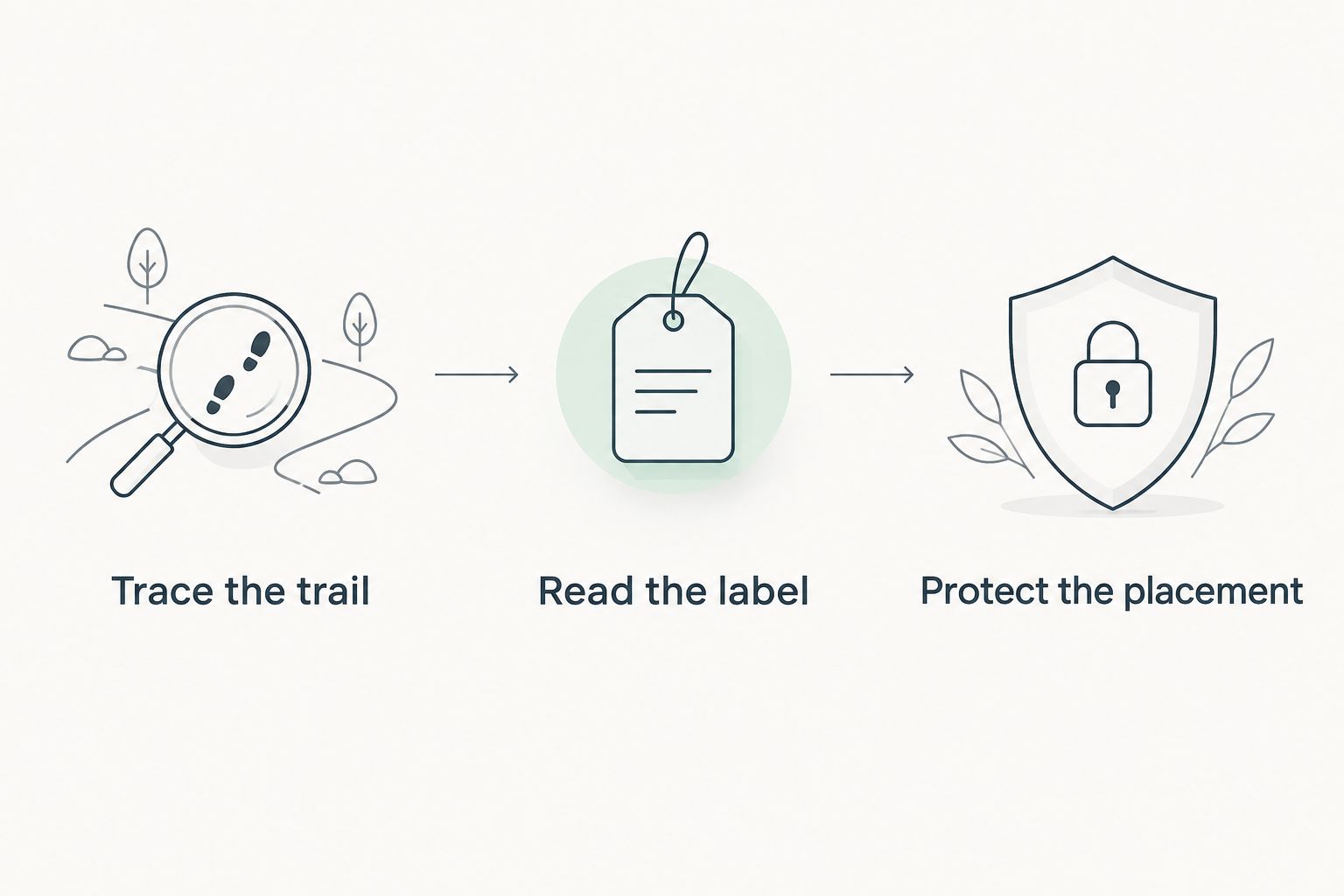
Make these checks before treating
Use 3 selection checks before opening a product. They keep the decision tied to the infestation and the label.
- Trace the trail: Observe where ants travel and enter. Avoid dismantling fixtures or disturbing inaccessible spaces to chase them.
- Read the label: Confirm the target pest, permitted location, application method and precautions for the actual product.
- Protect the placement: Choose a permitted location where children, pets, food and routine cleaning will not interfere with treatment.
After placement, observe feeding and follow the label’s inspection or replacement instructions. Do not invent a treatment deadline: different products have different directions, and a trail disappearing briefly is not proof of lasting control.
Alongside treatment, use 4 housekeeping actions: clean food spills, seal stored food, empty food waste and address accessible moisture sources. These actions remove competing resources; they do not replace treatment of an established problem.
Which ant control option should you choose?
Choose enclosed ant bait stations for an accessible indoor trail, provided the ants accept the bait and the label permits the placement. Move to gel for precision, liquid bait for accepted liquid feeding or granular bait for an appropriate outdoor site.
Marks Pest Control is an ant control service option for homeowners who need inspection and treatment rather than another DIY product. Professional assessment becomes the next step when trails recur, the source is inaccessible or safe household placement is not practical.
Keep your 2026 treatment record simple: note the product name, placement location, application date and observed feeding. That record helps you explain what has already happened without relying on memory or repeatedly mixing treatments.
Discuss your recurring ant problem
Marks Pest Control provides ant inspection and treatment services for residential property owners.
FAQ
What are the best ant control products for an Australian home?
Enclosed ant bait stations are the default choice for accessible indoor trails when ants accept the bait and the label permits placement. Gel, liquid bait and outdoor granular bait suit different locations and feeding conditions.
Is ant bait better than ant spray?
Accepted ant bait is better suited to colony-directed treatment than contact killing alone. Contact spray treats exposed ants, but a reduction in visible ants does not establish that the colony has been controlled.
Why are ants ignoring my bait?
Ants ignore bait when they do not accept the formulation or cannot access it as intended. Check placement and product directions, and remove competing food sources rather than repeatedly adding more bait.
Can I spray ants beside a bait station?
Do not spray the bait station or its feeding area. Spray can contaminate bait or interfere with feeding; check product directions before combining treatments.
Are enclosed ant bait stations safe around pets?
An enclosed housing does not make an ant bait station petproof. Follow the label and position the station where pets and children cannot access or disturb it.
Can I use outdoor ant granules in my kitchen?
Use a granular product indoors only if its label expressly permits that application. An outdoor ant treatment is not automatically suitable for kitchen surfaces or indoor trails.
When should I call a pest controller for ants?
Call a pest controller when ants repeatedly return, the source is inaccessible or you cannot place treatment safely. Marks Pest Control offers ant inspection and treatment services for residential and commercial property owners.
One last thing
The word bait matters more than the shape of the product. A granule is a delivery format; it does not tell you whether the treatment relies on feeding or contact.
Before your next application, check that distinction on the label. It prevents the common decision error of choosing something that kills visible ants when your actual aim is colony-directed control.